

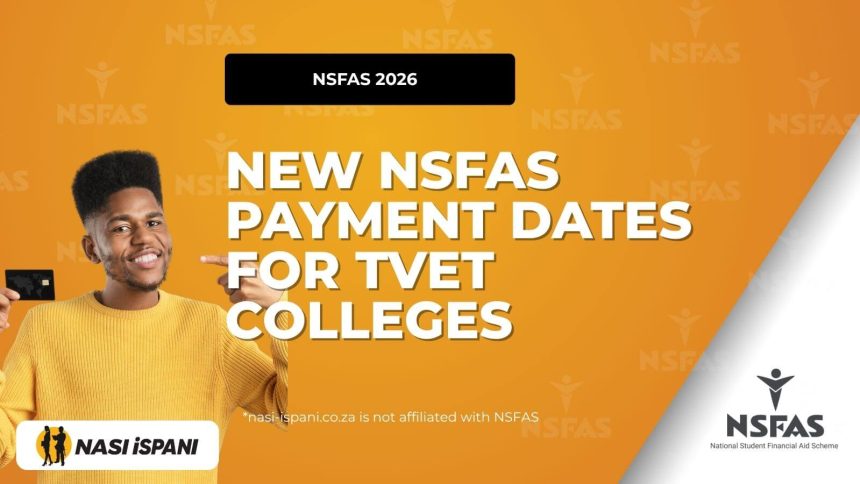
Your April allowance is arriving eight days earlier than expected, here is what that means for your budget and how to make the most of it.
If you are a TVET college student receiving NSFAS funding, there is an important update to your April 2026 NSFAS payment dates. The National Student Financial Aid Scheme has revised the April allowance disbursement date, and knowing about this change early gives you a real advantage when it comes to planning your month.
New NSFAS Payment Dates
NSFAS has officially revised the April 2026 payment schedule for TVET college students:
- New payment date: 17 April 2026
- Previous payment date: 25 April 2026
- Change: Payment moved forward by 8 days
This means students will receive their April allowances earlier than expected, which is good news, but it also requires careful planning.
Why This Matters
At first glance, getting your NSFAS allowance earlier sounds like a win—and it is. But there’s an important detail many students overlook:
An earlier payment means a longer gap before the next one.
For example, if your next payment follows the usual monthly cycle, you may need to stretch your April allowance for more days than usual.
Here’s how this affects you:
- You’ll have money sooner for urgent expenses
- But you may run out faster if you don’t budget properly
- You’ll need to plan for essentials over a longer period
For many TVET students, NSFAS allowances cover:
- Rent or accommodation
- Transport to campus
- Groceries and daily meals
- Study materials and data
Without proper planning, it’s easy to spend quickly and struggle later in the month.
How to Plan Your NSFAS Allowance
To make your April allowance last, you’ll need a simple but effective budget. Here’s a practical guide you can follow:
1. Prioritise Your Essentials First
As soon as your payment reflects on 17 April, take care of:
- Rent or accommodation
- Transport costs
- Food and groceries
These are non-negotiable expenses, pay them first before anything else.
2. Break Your Money Into Weekly Amounts
Instead of spending freely, divide your allowance into weekly portions.
For example:
- Week 1: Groceries + transport
- Week 2: Smaller top-ups
- Week 3: Essentials only
- Week 4: Emergency buffer
This helps prevent overspending early in the month.
3. Avoid Impulse Spending
Getting paid earlier can feel like a bonus, but it’s not extra money.
Try to avoid:
- Unplanned takeaways
- Buying clothes or gadgets
- Lending money you may not get back
Stick to your plan, especially in the first week.
4. Plan for the “Long Gap”
Because your payment came earlier, you’ll likely need to stretch it for a longer period.
A smart move:
Set aside a small portion (even R100–R200) as a buffer for the last week of the month.
5. Track Your Spending
Keep a simple record of what you spend daily. You can use:
- Notes on your phone
- A budgeting app
- A small notebook
This helps you stay in control and adjust if needed.
Common questions
What if my payment does not arrive on 17 April?
Allow one to two business days for processing. If funds have not reflected by 19 April, log in to your myNSFAS student portal to check for any flags on your account — missing documents or banking detail mismatches are common reasons for delays. Contact NSFAS directly if everything appears in order but payment is still outstanding.
Does this date change also apply to university NSFAS students?
This specific update relates to the TVET college payment schedule. University students funded through NSFAS should check with their institution’s financial aid office or the NSFAS website for their applicable dates.
Who qualifies for NSFAS funding at TVET colleges?
South African citizens enrolled at a registered public TVET college in an accredited programme, with a combined household income at or below R350,000 per year, are eligible to apply. If you are unsure of your funding status, check your application at www.nsfas.org.za.
Will future payment dates change again?
Payment schedules can be revised throughout the year. The best way to stay ahead of changes is to follow official NSFAS communication channels rather than relying on second-hand information from social media groups or WhatsApp chains.
Where to Check for Official Updates
Always rely on trusted and official sources for NSFAS information. These include:
- The NSFAS website
- Your TVET college’s student portal
- Official NSFAS social media pages
Avoid relying on unverified WhatsApp messages or social media posts, as they may contain incorrect information.
The revised NSFAS April 2026 payment date of 17 April is genuinely good news — but it rewards students who plan ahead. Use the earlier arrival of funds to get ahead of your fixed costs, set a weekly spending limit, and make your allowance last until May. The students who manage their NSFAS payments well are not the ones who earn the most — they are the ones who plan first.
Check your status, spread the word to your classmates, and stay connected to official channels for future updates.