


A Year-End Performance Review gives you the chance to discuss your achievements, receive constructive feedback, and plan your career growth. While many companies schedule annual reviews automatically, others expect employees to request one. Knowing how to prepare can help you leave a positive impression and set yourself up for future opportunities.
- Why a Year-End Performance Review Matters
- How to Request a Year-End Performance Review
- How to Prepare for Your Year-End Performance Review
- Demonstrate Professionalism During the Meeting
- Discuss Areas for Improvement
- Ask Meaningful Questions
- If You Want a Promotion or Salary Increase
- Common Mistakes to Avoid
- Follow Up After the Review
- Frequently Asked Questions
Whether you want a promotion, a salary increase, or simply want to improve your performance, preparation is the key to a successful review.
Why a Year-End Performance Review Matters
A year-end review is more than an administrative task. It allows both you and your manager to discuss your contributions over the past year and set goals for the future.
A productive performance review can help you:
- Receive honest feedback about your work.
- Highlight your achievements.
- Identify areas for improvement.
- Discuss career progression.
- Explore training and development opportunities.
- Set measurable goals for the coming year.
Rather than waiting for feedback, use the review as an opportunity to take ownership of your professional development.
How to Request a Year-End Performance Review
If your employer has not scheduled a review, you can request one professionally.
Send a short email or speak to your manager a few weeks before the end of the year.
Here is an example:
Hi [Manager’s Name],
As we approach the end of the year, I would appreciate the opportunity to schedule a performance review. I would like to discuss my achievements, receive feedback, and set goals for the coming year. Please let me know a suitable time.
Thank you.
Keep your request polite and focused on professional growth.
How to Prepare for Your Year-End Performance Review
Preparation makes a significant difference. Do not rely on memory alone.
Instead, create a list of your accomplishments throughout the year.
Gather Evidence of Your Achievements
Include measurable results wherever possible.
Examples include:
- Projects completed successfully.
- Sales targets achieved.
- Customer compliments or positive feedback.
- Improvements to workplace processes.
- Deadlines consistently met.
- Extra responsibilities you accepted.
- Training courses or certifications completed.
Specific examples strengthen your discussion and demonstrate your value.
Review Your Goals
If your manager set objectives at the beginning of the year, review each one carefully.
Ask yourself:
- Did I achieve the goal?
- What challenges did I overcome?
- What did I learn?
- What results did I deliver?
This preparation helps you discuss your progress confidently.
Demonstrate Professionalism During the Meeting
Your attitude matters just as much as your achievements.
During the meeting:
- Listen carefully.
- Answer questions honestly.
- Stay calm when receiving feedback.
- Focus on solutions rather than problems.
- Ask for clarification if needed.
Constructive feedback helps you improve. Therefore, avoid becoming defensive.
Discuss Areas for Improvement
No employee performs perfectly every year.
Managers appreciate employees who recognise opportunities to develop new skills.
For example, you might want to improve:
- Leadership skills.
- Time management.
- Public speaking.
- Technical knowledge.
- Communication.
After identifying an area for improvement, explain how you plan to address it.
Ask Meaningful Questions
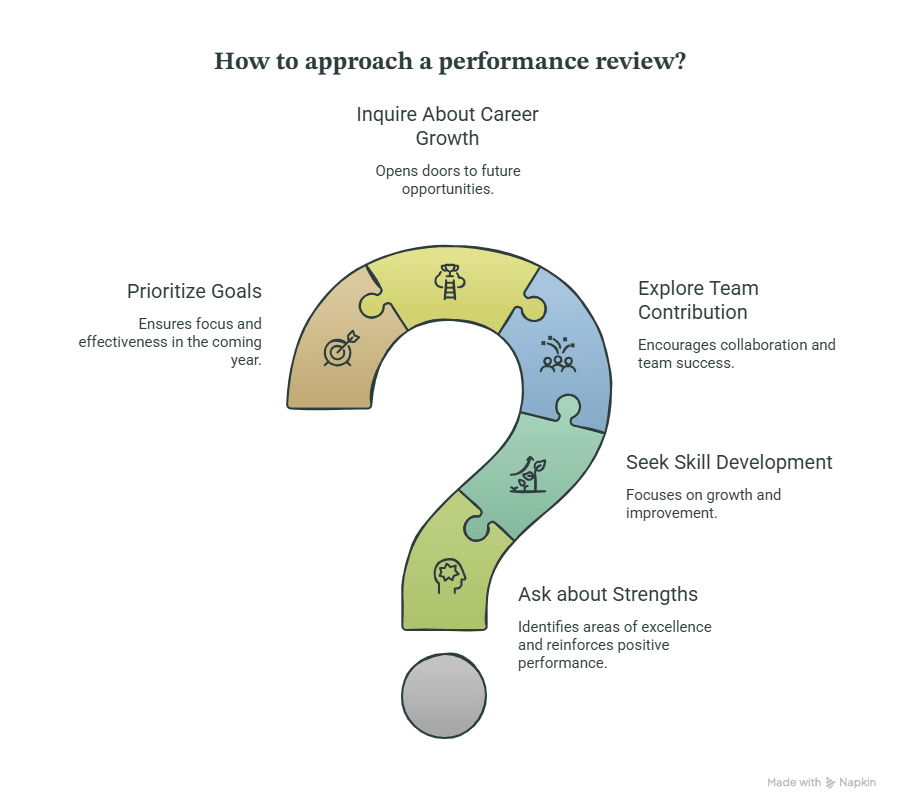
A performance review should be a conversation rather than a one-sided evaluation.
Consider asking questions such as:
- What have I done particularly well this year?
- Which skills should I develop next?
- How can I contribute more to the team?
- What opportunities are available for career growth?
- What goals should I prioritise next year?
These questions show initiative and a willingness to learn.
If You Want a Promotion or Salary Increase
Many employees use their annual review to discuss career progression.
However, your request should focus on your contributions rather than personal financial needs.
Support your discussion with evidence such as:
- Consistently strong performance.
- Increased responsibilities.
- Positive business results.
- Successful projects.
- Leadership contributions.
If you believe you are ready for more responsibility, explain why using measurable achievements.
Common Mistakes to Avoid
Avoid these mistakes during your review:
- Arriving without preparation.
- Speaking only about recent achievements.
- Providing vague examples.
- Interrupting your manager.
- Comparing yourself with colleagues.
- Ignoring constructive feedback.
- Leaving without understanding your goals.
Instead, remain professional and focus on continuous improvement.
Follow Up After the Review
Your work does not end once the meeting is over.
After your review:
- Write down the feedback you received.
- Confirm your goals with your manager.
- Create an action plan.
- Schedule regular check-ins if possible.
- Track your progress throughout the year.
Following up demonstrates accountability and commitment.
Frequently Asked Questions
What is a Year-End Performance Review?
A Year-End Performance Review is a formal meeting between an employee and their manager to discuss work performance, achievements, challenges, and future goals.
Can I request a performance review if my company does not schedule one?
Yes. You can politely ask your manager to arrange a review if your organisation does not hold annual performance discussions.
What should I bring to a performance review?
Bring a list of your achievements, completed projects, performance data, positive feedback, and any questions about your career development.
Should I ask for a salary increase during my review?
Yes, if you have strong evidence of your contributions, increased responsibilities, and positive results. Base your request on your performance rather than personal financial circumstances.
How can I make a good impression during a performance review?
Prepare thoroughly, communicate clearly, listen to feedback, remain professional, and demonstrate a willingness to learn and improve.